Posts

An Englishman Loves a Sporting Gamble

Image
On reading through the annals of charity gambling prosecutions and moralising, it isn't difficult to find a sweeping generalisation should you be in need of one. Back in the 20th century, the nuances were lost on those both for and against charity lotteries. Take the instance of a 1943 court case. Two men connected with a lottery that had been regularly taking place in Staffordshire were fined a total of £45 between them. The pottery worker that had organised the lottery was fined £20, while the licensee of the pub where chances were being sold was fined £25 for allowing his premises to be used in such a way. 140 people were found to have been taking part in the lottery at 6d a time, and the proceeds were going to the Red Cross, local hospital and Prisoner of War Comforts Fund. In summing up, both sides gave an opinion. The defence solicitor said that when lotteries are stopped, charity is the loser. "An Englishman loves a sporting gamble and that's what makes us the natio...
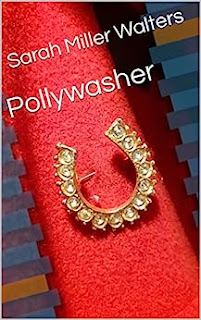

Pollywasher

Image
 An extract from my short story Pollywasher: 2. Nancy Next Door “I don’t really believe in gambling do I? I mean, I go with my mum to the bingo to keep her company, just a couple of cards to be sociable. Never win anything, though my mum has had a couple of touches but then the amount she spends she’s bound to. She won’t have got back what she’s spent will she? Barbara though. That was her life, her whole life from what I could tell, never nothing but betting on the horses and on the dogs and the casino. She’s borrowed milk off me that I’ll never see again will I? She used to get all fancied up, don’t know how she afforded that. The feller I suppose. I did take to her though, when I got to know her, you know? We met on the landing and had a chat a couple of times, then she invited me in for a cuppa. Somehow I ended up telling her about all my trouble and about my boy being arrested and she was dead nice about it all. A lot of people, they judge you don’t they? But I could tell she ...

Priests in a Pools Pickle

Image
 Normally the words priest and gambling in the same sentence would be all about hellfire and damnation. But this wasn't the case in a report that appeared in the Sheffield Telegraph in January 1953. This report covered the announcement by police in Bradford that they had put a stop to a football pool that had been operated by four Catholic churches in the city. The report also remarks on a similarity to a case in Cheshire where another priest had been running a football pool in aid of Catholic schools. The Bradford problem was described thus: "The pools method of giving members static code numbers with the team changed every week constituted a lottery that had no skill attached." And it wasn't peanuts that were talking about here, one church raised a whopping £700 a week, keeping £200 for the charitable cause. 70 years on, I'd love to be raising that much in a lottery for my little charity!  "The police were very nice about it" said one of the priests, t...

Joynson-Hicks Says No

Image
Despite the palpable need for charity fundraising after World War One in order to help support old soldiers, hospitals and families on a low income; the gambling aspect had not been legalised. A decade after the end of the war, the debate rumbled on.  The Home Secretary in 1928 was the Conservative MP William Joynson-Hicks - known to be uptight, pious and prudish. Newspapers and Hansard report on various run-ins between Joynson-Hicks and other MPs who were frustrated at the issue of lucrative charity lotteries and tombolas leading to prosecutions. Even worse, some fundraisers were broken up by the police and prosecuted, while others seemed to fall under the radar. A particular point of discussion that year concerned two events in Brighton. On 4th July of that year, Sir Cooper Rawson, MP for the constituency, asked the Home Secretary  "...why a voluntarily organised draw on behalf of the funds of a Hove hospital was stopped by the Home Office whilst draws conducted on identical...

Gambling for World War One Charities

Image
For much of the 20th century, gambling - even for a good cause - was not supported by law. This came under strain during the First World War, when those at home felt a compelling need to do whatever they could for those at the front, and those that had been severely injured. But even in May 1918, the Metropolitan Police Commissioner publicly drew attention to  "the fact that to advertise, hold or promote a lottery, tombola, sweepstake, raffle...etc is an offence against the law." (Holloway Press, 31.05.1918).  In the same breath as expressing sympathy for war charities, the fundraisers were being told in no uncertain terms that if they broke this law, action would be taken against them. Apparently a surge in this type of fundraising was the catalyst for this pronouncement. In the August of that same year, a bill went to the commons to legalise lotteries for war charities - and only for those registered under the War Charities Act of 1916 -  but this was defeated...

Lead us Not...

Image
Every now and again, news emerges of someone who was meant to be raising money for charity letting temptation get the better of them. It's usually when they're  faced with the prospect of a large collection resulting from some gambling activity such as a raffle or a lottery. Its almost as if the perceived immorality of it all rubs off on them.  Sometimes it's just greed. Mostly it's because the temptee is in some kind of trouble and this offers a way out. Consider the case of 'Father Ted' and the car raffle. Ted's written off the car he's meant to be raffling so he tries to engineer the draw so that Dougal wins it. It's a fictional comedy show but that kind of scenario isn't so far fetched. Several years ago, 2 people who were running a syndicated lottery were sentenced for fraud. 7 jackpot prizes had not reached the winners. Where the money had gone wasn't released but all indications were that the company had made a couple of bad moves and ...

Skittles

Image
 The game of skittles - a bit like bowling only more English - was very popular in western regions. It involved throwing wooden balls at 9 small pins. A Somerset newspaper from the 1970s shows that the game was also turned to fundraising purposes.  The are two adverts for skittle tournaments, both proclaiming that they would be held in aid of charity. The beneficiaries are vague though. One advert says that the tournament is in aid of the blind while the other just says "in aid of charity." Obviously these games, held in "inns" in rural places are the main attraction- the charity bit being an add on to make it all seem a little more genteel? https://www.amazon.co.uk/Woods-Ware-China-Serving-Hatch-ebook/dp/B08D3JDN94